
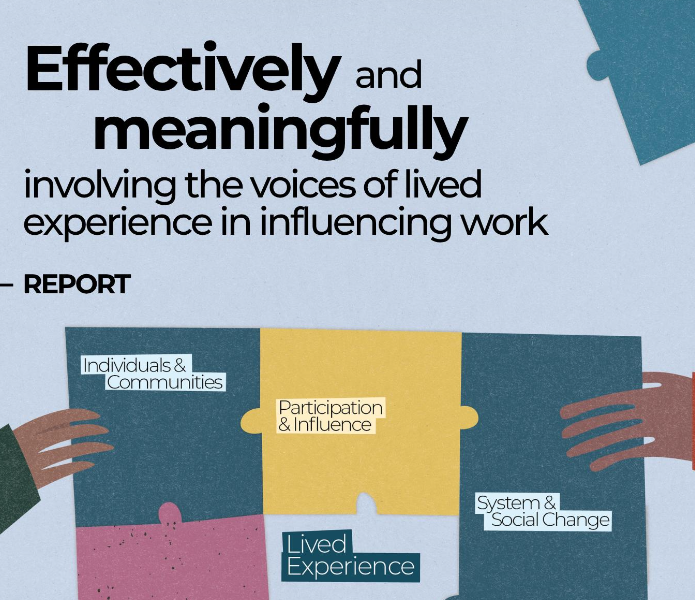
At Resilience Learning Partnership (RLP), we believe that people with lived experience bring vital insight, knowledge, and expertise that can strengthen policy, funding, and practice. Today, we are pleased to launch a new report commissioned by The Robertson Trust and delivered in partnership with The Lines Between and the Improvement Service.
Why This Research Was Needed
Across Scotland, organisations are increasingly recognising the value of involving people with lived experience in decision-making and influencing activities. There is a growing commitment to ensuring that the voices of people affected by poverty, trauma, and inequality help shape the policies, services, and funding decisions that impact lives.
However, there are important questions about what meaningful involvement actually looks like in practice. While many organisations are committed to involving people with lived experience, there can be challenges around ensuring participation is genuinely influential rather than tokenistic, and that people feel valued, supported, and respected throughout the process.
Too often, individuals can be asked to repeatedly share personal stories, expected to represent the views of entire communities, or invited into conversations without clear evidence that their involvement has shaped decisions or led to change. There are also important considerations around wellbeing and power. People should not have to revisit difficult experiences in order to be heard, nor should they be expected to speak on behalf of everyone who has had similar experiences.
At the same time, organisations are navigating questions about how to recognise and value lived experience expertise alongside professional knowledge, research, and practice-based evidence. How can different forms of expertise work together? What support is needed to ensure participation is safe, empowering, and trauma-informed? How can organisations move beyond listening to ensure that lived experience genuinely informs action and change?
As more organisations, funders, and policymakers seek to embed lived experience within their work, these questions are becoming increasingly important. Getting this right is not simply about creating opportunities for participation. It is about building cultures, systems, and approaches that value different forms of expertise, share power more effectively, and lead to better decisions and outcomes.
This research was commissioned to explore these issues in greater depth and identify practical ways for organisations, funders, and leaders to create approaches that are both trauma-informed and impactful.